Hype, Poetry, or Precision? On the Art of Describing Oud and other complex aromatics.
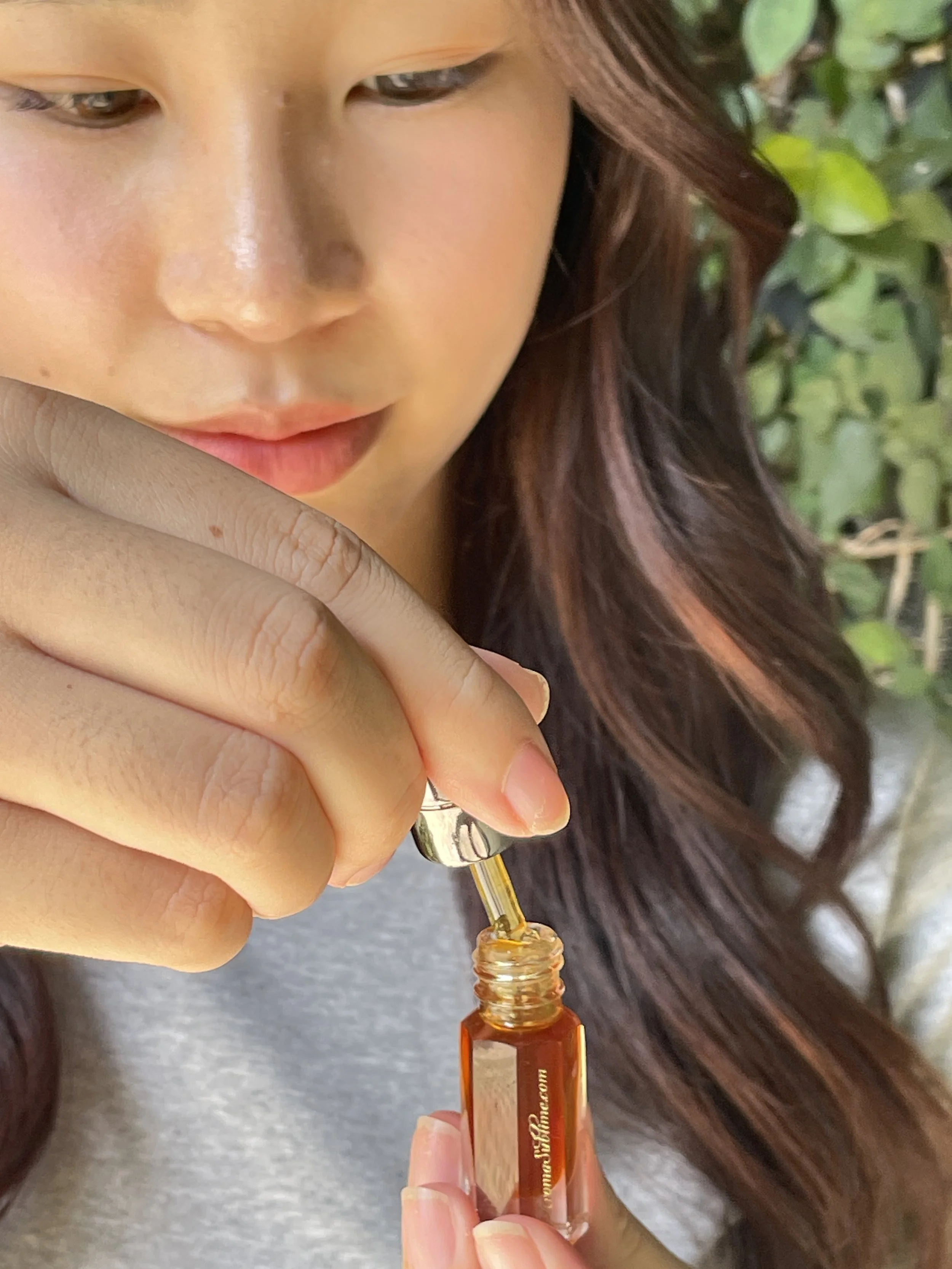
“Great Oud is expensive, personal, and deeply subjective. A precise description protects us as well as our customer.”
At Aroma Sublime, we are often asked why many of our product descriptions are so detailed, and occasionally perceived as overly elaborate or even exaggerated. To be fair, these concerns generally come from customers or potential customers who are fairly new to the very best Oud oil and other premium aromatics, or simply from those who are not particularly predisposed to Epicurean or olfactory deep dives. And we forgive you. To be as clear and direct as possible, we have no interest in promoting snobbery or gatekeeping. We are just doing what we love to do. This article exists to clarify our approach, our intent, and the perspective from which we assess and describe Oud oils in particular, as well as some of our other more complex aromatic offerings such as our sandalwood oils, rose oils, our famous frangipani flower essential oil, and others. Keep in mind as you read this article that many of these details also apply, to some degree, to other especially complex essential oils you might encounter in the marketplace like Labdanum, Patchouli, or Vetiver, and so many others.
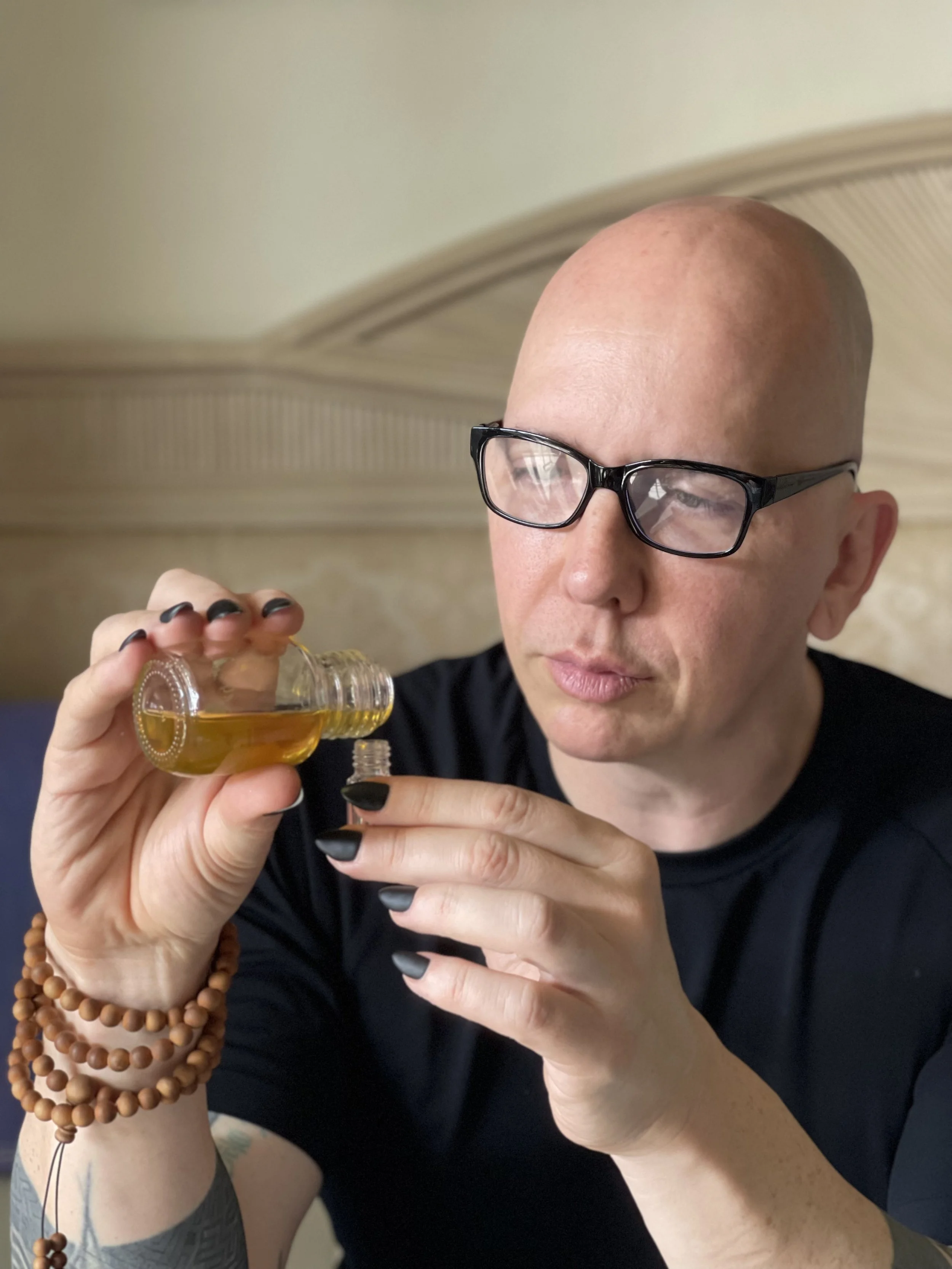
Pierre Black, co-owner Aroma Sublime.
Who is this written for?
If you are new to fine aromatics entirely, welcome. This article, and our detailed product descriptions, are for you as much as anyone.
If you have ever found yourself genuinely absorbed in the layered complexity of a good wine, a single-origin coffee, a fine aged tea, or a well-made cigar - pausing to notice the small details, how the experience shifts and evolves rather than simply consuming it - then you already possess the sensory instincts that the finest natural aromatics draw on. Oud and its companions are simply another expression of that same pleasure: slow, attentive, fully present, and richly rewarding to those willing to engage. They are authentic, pure expressions of nature, shaped and stewarded by human hands over hundreds or even thousands of years. This is a very different world from the synthetic chemistry of modern commercial perfumery, which is engineered for mass appeal, rather than the artisanal refinement of a naturally occurring aromatic substance. If anything, fine natural aromatics belong in the company of fine wine, coffee, spices, and spirits - not at the fragrance counter. (Although we are not judging. It’s simply another realm entirely.)
Why does Oud oil deserve, or require, such an elaborate description?
High quality wild agarwood oil in particular, wild Oud, is one of the most complex natural essential oils known. To explain this complexity as plainly and simply as possible: Wild harvested Oud essential oil has a greater number of individual chemical constituents than most other single-source natural aromatics. This, combined with its legendary longevity (staying power when worn on skin or applied to clothing etc.), means that there can be a huge variety of separately perceptible aromatic notes within the overall experience. The complexity and longevity of Oud mean that the dry-down (the experiential unfolding of a complex aromatic over time when worn or diffused) is akin to attentively enjoying an elaborate perfume composition - an aromatic journey, much more than a single generalizable scent. Most other single-source natural aromatics have a more narrow chemical profile, and thus fewer perceptible separate and individual aromatic notes.
It should be further noted that the chemical complexity of a particular oil does not necessarily denote longevity, nor does longevity necessarily denote chemical complexity. Rather, certain oils such as Oud and Sandalwood stand out because they offer both complexity and longevity.
While the chart below is not comprehensive, we've included some of the most complex common essential oils which top out at around 250-300 individual chemical constituents, while Oud clearly outperforms, sometimes exceeding 600 individual chemical constituents.
Comparison of chemical complexity for a few popular essential oils:
The chart indicates the approximate number of identified individual chemical constituents in some popular natural essential oils. Figures are approximate and will vary by origin, extraction method, and analytical technique, and represent cumulative totals across the literature. Here we are referencing only steam- or hydro-distilled essential oils. Other extraction methods may result in significantly different compound counts. It should also be noted that as equipment sensitivity and test accuracy inevitably improves over time, more chemical constituents found in only trace amounts are very likely to be identified in all essential oils, increasing the total number of identifiable chemical constituents.
Aromatic material / Approximate number of identified constituents
Wintergreen oil (Gaultheria procumbens) / ~3 to 10
Clove bud oil (Syzygium aromaticum) / ~20 to 40
Lemon peel oil (Citrus limon) / ~40 to 100
Lavender oil (Lavandula angustifolia) / ~80 to 150
Rose oil (Rosa damascena, steam distilled) / ~80 to 130
Frankincense oil (Boswellia species) / ~80 to 150
Sandalwood oil (Santalum album) / ~100 to 150
Vetiver oil (Chrysopogon zizanioides) / ~150 to 250+
Nagarmotha / Cypriol (Cyperus scariosus) / ~150 to 300+
Oud oil (wild Aquilaria species) / ~150 to 600+
The challenge of describing Oud at all is that Oud does not behave like most aromatic materials. There is simply a much greater variety of molecules in play, and these are released over a longer timeframe, and thus there is more experienced complexity.
The experience itself is not static, because the oil itself, the environment, and the perceiver are not static. Oud evolves in the bottle and on your skin. An aromatic profile can shift, both in its actual chemistry, and in how this chemistry is released and perceived, depending on a variety of conditions.
Once applied to skin or other substrate, how it is perceived will be directly affected by the wearer's body chemistry and activity level, environmental factors such as temperature, humidity, and air pressure. As well, variations in one's own sensory acuity, depending on factors such as the time of day, whether you ate recently or not, or other considerations like pollution, cold or flu, allergies, consumption of alcohol, tobacco, certain medications, or chewing gum, which might temporarily diminish or enhance your ability to perceive aromatic nuance. And of course the effect of other aromatics which may be present on the body or in the environment might alter one's perception; other perfumes, soaps, skincare products, laundry detergent, and so on.
Storage and aging also has an influence. In storage, over time, an oil's profile will morph somewhat depending on temperature, exposure to air, light, movement, and even the type of vessel it is stored in. While some complex aromatics such as Rose oil might deteriorate over time, a beloved feature of both Oud and Sandalwood is their tendency to consistently improve with extended aging.
Language, culture, geography, and individual note perception.
Any attempt to describe an Oud oil fully will almost always fall short. Our goal, therefore, is not to be exhaustive when writing a description. It is to be as accurate, helpful, and transparent as possible within the limits of language and culture. We primarily use common Western aromatic, culinary, and aesthetic vocabulary. This is a deliberate choice. Most of our customers come from backgrounds where Western perfumery language, culinary references, and everyday sensory metaphors are more accessible than traditional Oud-specific cultural frameworks from the Middle East or East Asia. At the same time, there are moments where common language simply fails. In those cases, we may introduce technical, botanical, cultural, or other specialized terminology when it genuinely adds clarity or educational value. Our intention is accessibility first, precision and perspective where needed, and a little sprinkle of nerdy excess. (Please bear with us if that's not your thing.)
Aroma Sublime's style and niche.
We are not trying to please everyone in the Oud world. Our products are of a particular style and niche, and our way of talking about them reflects that.
Aroma Sublime sits between the traditional Asian and new-school sensibilities - sharing the Asian preference for sweeter and cleaner wood and resin character with traditional copper pot distillation, while bringing the new-school emphasis on transparency, precision craftsmanship, and a modern, direct communication style. This is not a judgment of any tradition. We hold deep respect for the full range of what Oud has been and can be. It is simply a matter of where our taste, our sourcing relationships, and our distillation philosophy have naturally led us. If our descriptions occasionally feel unfamiliar, less rooted in the traditional vocabulary of the Middle Eastern, Indian, or broader East Asian Oud trade, that is probably why. Our hope is that we speak to traditionalists with the quality and reputation of our products, and that we speak to new and less experienced customers in plainer language. We are seeing these revered and culturally significant aromatics through our own eyes, and we think that has a unique value.
Why Oud descriptions easily sound overwritten
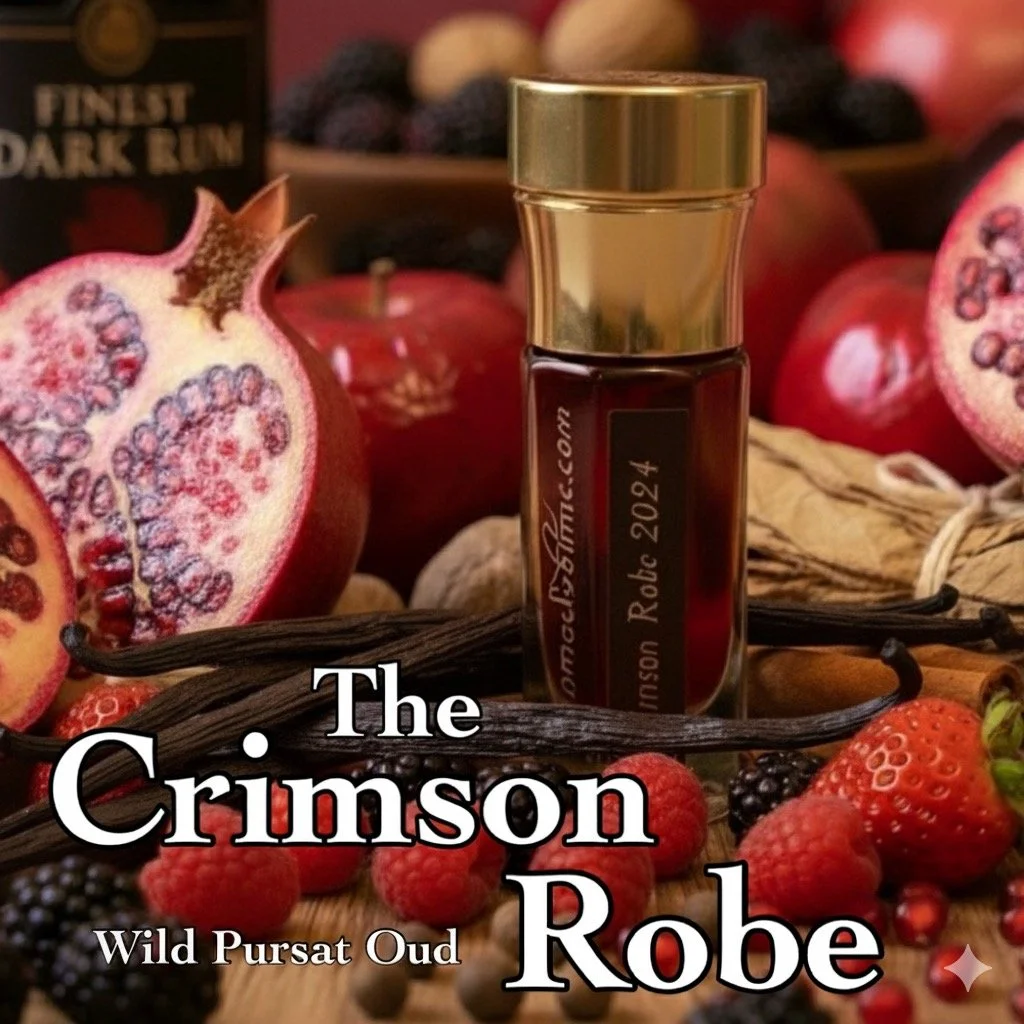
How we use imagery to evoke a complex scent profile.
Oud contains many aromatic layers simultaneously. Depending on the oil, you may encounter specific wood types, resins, fermentation, fruits, smoke, leather, sweetness, bitterness, animalic facets, mineralic aspects, musk-like qualities, florals, and fat; sometimes all at once. Perhaps the aromatic notes unfold like a slow, consistent cruise. Or more like a dynamic fast-paced dance to a full symphony orchestra. When we attempt to describe this complexity and unfolding honestly, the result can feel dense, or even overwhelming. This is not because we are trying to add drama. It is because oversimplifying Oud would be misleading and incomplete. That said, no description can possibly list every nuance present in an Oud oil. The act of describing requires discernment. We choose to emphasize what we perceive as the most fundamental, persistent, and structurally important aspects of a given oil. If an aromatic note is fleeting, highly contextual, or only apparent to a small subset of noses, we may omit it even if we personally perceive it. Restraint is also part of accuracy.
We don't avoid poetry. We discipline it.
Metaphor and poetic language have a genuine place in aromatic description. Sometimes a well-chosen image lands more accurately than any technical term. When we describe the base of our Khanh Hoa Sinking as settling into "a finely stocked cigar humidor, where you'll enjoy rosewood, cedar, and the finest tobacco leaf," or note that Deep Purple offers "a deep and dignified sanctum in which the other notes can settle and luxuriate," we are reaching for something that a constituent list simply cannot convey. Good metaphor earns its place.

As a company we strictly limit our use of AI content with one exception; We find it very helpful in creating evocative visual scent-scapes of a particular scent profile.
The risk, however, is that poetry is inherently personal. A metaphor that resonates perfectly for one reader may mean nothing - or something entirely different - to another. Poetic descriptions are a gamble. They work beautifully when the reader shares enough common ground with the writer, and they fail quietly when they don't. An over-reliance on metaphor also creates a convenient hiding place for vagueness or misrepresentation - it is possible to write something that sounds evocative while communicating almost nothing precise. If you spend any time exploring the industry at large, you will immediately notice many providers who focus excessively on story and metaphor, rather than concrete note descriptions. Especially in the era of AI, hyperbolic and often nonsensical over-writing is becoming tragically common.
The opposite extreme is no solution either. A purely technical account - constituent percentages, GC-MS data, distillation parameters - might be useful to a chemist or high level perfumer, and largely meaningless to everyone else. Comprehensive laboratory analysis of every single product we release would tell most readers very little about whether an oil is likely to inspire them. (we also don't feel it's particularly useful or necessary for small-batch in-house products for which we oversee every aspect of production from forest to bottle.)
Our approach is to use metaphor sparingly and deliberately, as a bridge to something concrete rather than a destination in itself. The foundation of any description should be specific, grounded, and as transferable as possible across different readers and backgrounds. Poetry is the seasoning, not the meal.
How we assess our products:
Subjectivity does not mean carelessness.
All aromatic description is subjective. There is no way around this. But subjectivity does not mean improvisation or exaggeration. Our descriptions are based on repeated, careful evaluation over time. We smell Oud oils neat, on skin, and on paper or other carrier substrates. We revisit them after months and years of aging. We compare them against other oils from similar regions, distillation styles, and tree types. When we describe an Oud as having certain dominant characteristics, we are not attempting to impress or persuade. We are documenting a sensory assessment as faithfully as we can. Our descriptions are closer to tasting notes in a serious wine or coffee evaluation, than it is to commercial perfume ad-speak.
Aging, evolution, and reassessment.
Oud oils change over time. This is not deterioration, but rather favourable aging, and is one of the most beloved intrigues offered by Oud. Most Oud oils will deepen, round out, and harmonize as they age. Harsh edges soften. More sweetness may emerge. Animalic aspects often become more refined. The core character of an oil, however, usually remains stable. Because of this, we periodically reassess and update our Oud descriptions. As a general practice, we aim to revisit each Oud oil in our catalog at least once every year or so and revise the description if meaningful changes are observed. When a description evolves, it is not because the earlier one was wrong. It is because the oil itself has continued its journey.
Not a sales pitch.
It is important for us to say this clearly. Our product descriptions are not written to convince you to like an oil. They are written to help you decide whether it is likely to resonate with you before you ever smell it. We would rather lose a sale than misrepresent an oil. Great Oud is expensive, personal, and deeply subjective. A precise description protects us as well as our customer.
An invitation, not a conclusion.
Finally, we recognize that no description is definitive. Your perception may differ from ours. Your skin chemistry, cultural background, climate, physical environment, memory associations, and individual sensitivity will shape your experience in ways we cannot predict. This does not invalidate any perspective. But we hope that in this article has helped to elucidate our rationale and process as well as our unique perspective and style for writing aromatic descriptions. We welcome thoughtful feedback and dialogue around all our descriptions.
