 Image 1 of 4
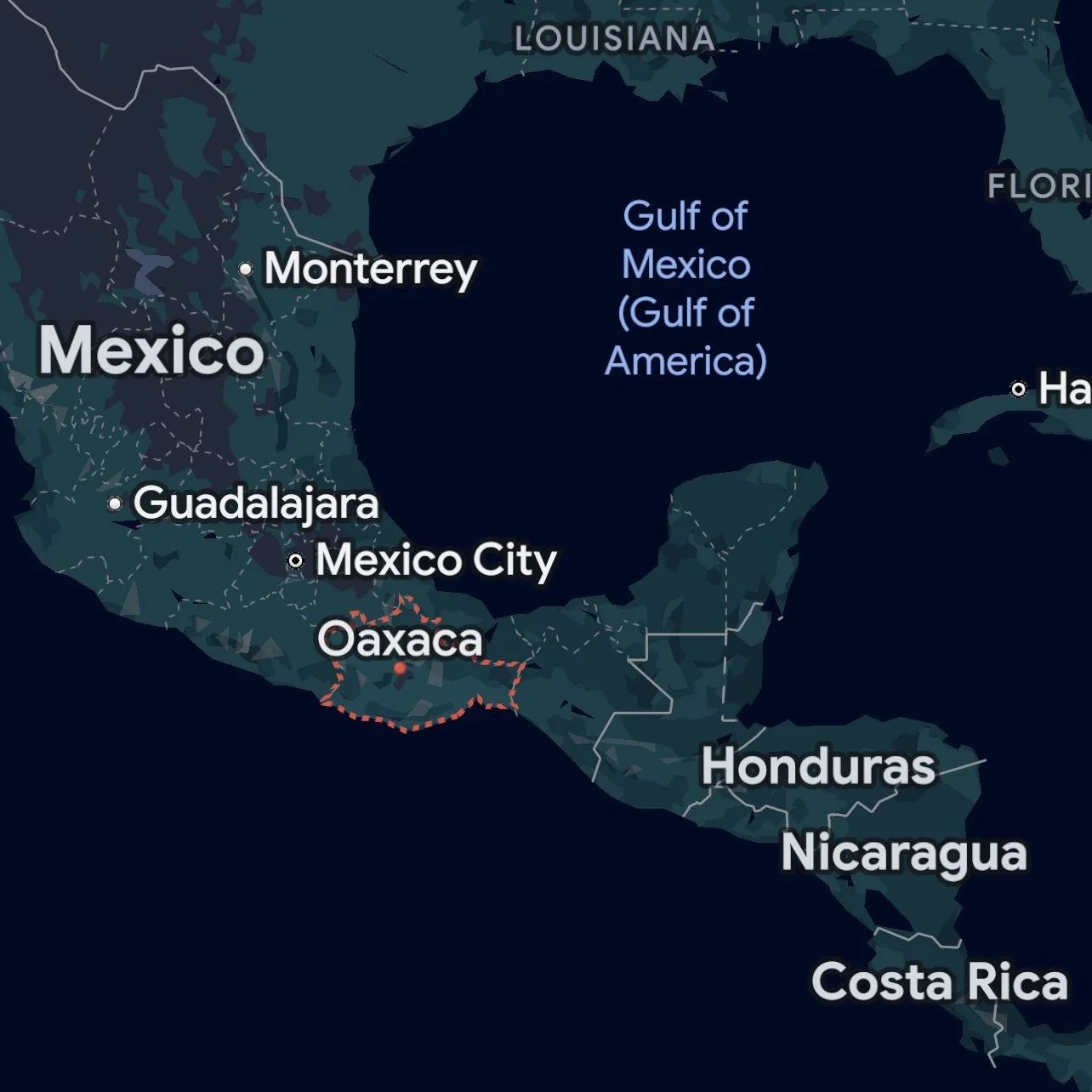 Image 2 of 4
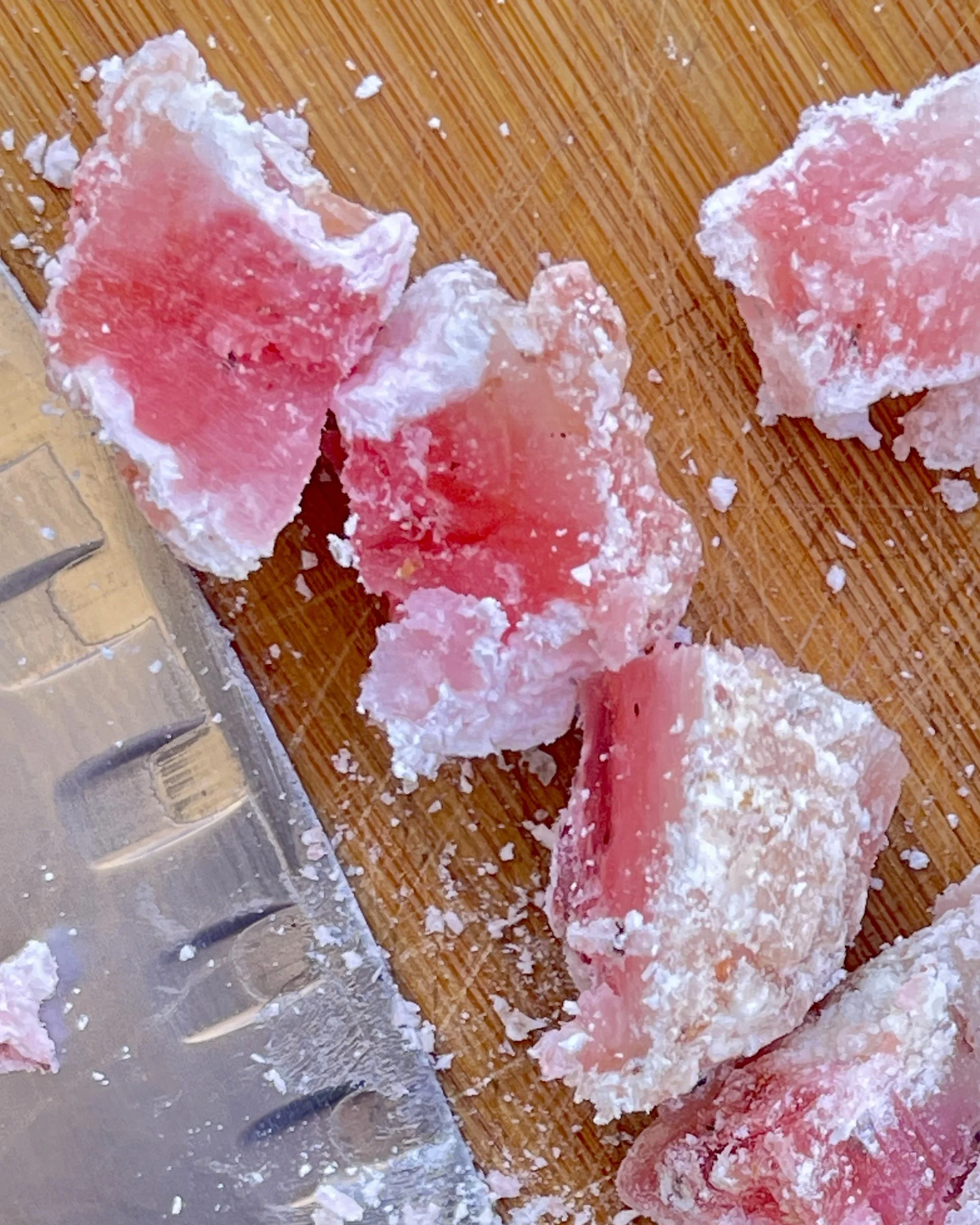 Image 3 of 4
 Image 4 of 4
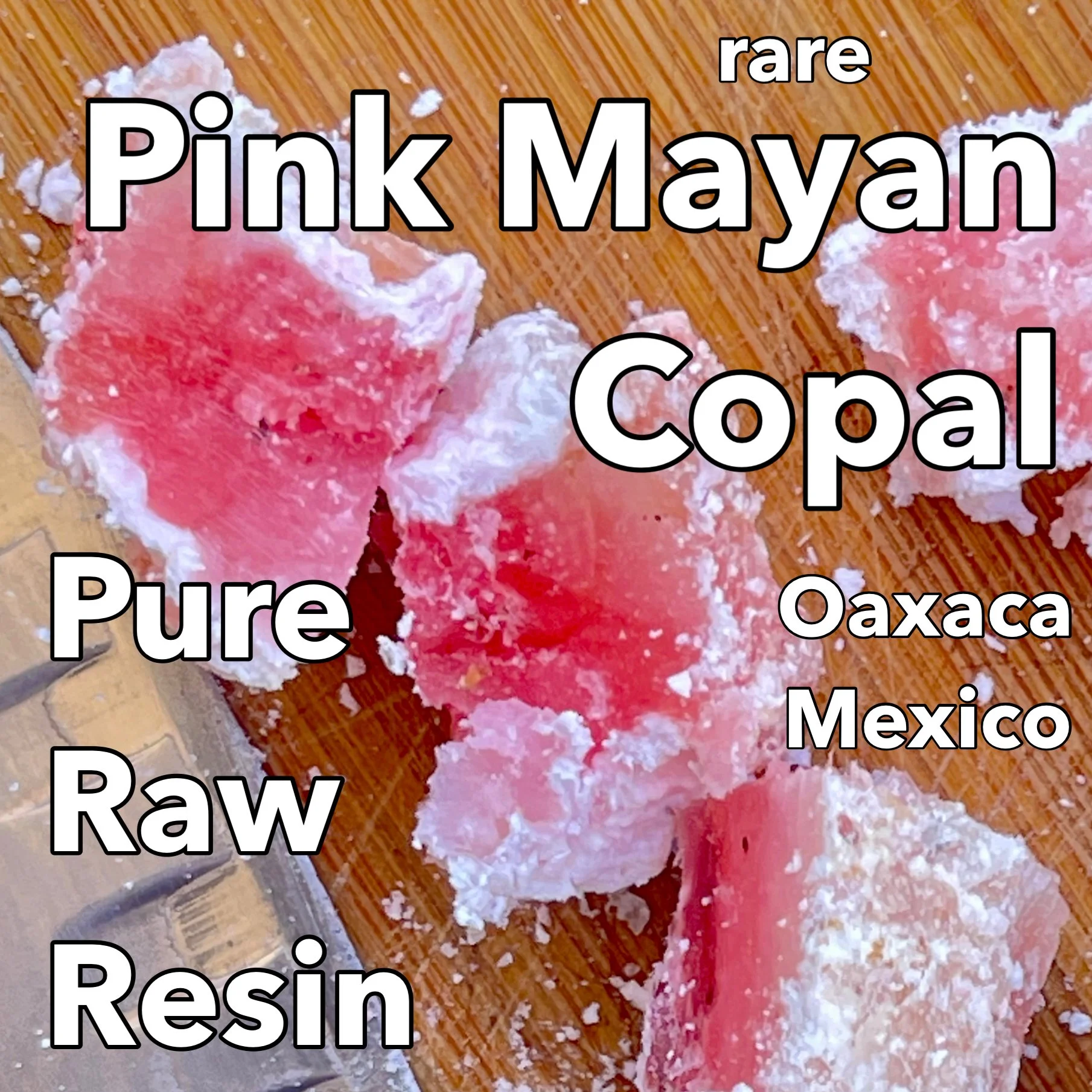
Rare Mayan Pink Copal Resin • Bursera bipinnata Pink Copal raw resin 10 gram jar • Oaxaca Mexico
Rare Mayan Pink Copal Resin • Bursera bipinnata Pink Copal raw resin 10 gram jar • Oaxaca Mexico
This exceptionally rare pink expression of Mayan “white” Copal resin makes up only 0.01% of the total resin harvest offers a markedly brighter, sweeter, fruitier aromatic profile when compared to its more common white counterpart. (also, as far as we know, the pink expression only occurs in the Oaxaca region of Mexico.)
We recommend that you heat this resin as you would any other resinous raw incense material, using charcoal or an electric incense heater.
You might also consider dissolving it in warm carrier oil (By itself or combined with other medicinal Ingredients ) to create a full spectrum oleoresin skin care product or anointing oil. However, we recommend you get fully informed before doing this, and we offer no medical or safety claims on such use.
Pink variety of White Mayan Copal or “Copal Blanco”
Bursera bipinnata | Oaxaca, Mexico
White Mayan copal, the resin of Bursera bipinnata trees, is a sacred aromatic and medicinal herb with deep roots across Mesoamerica. For centuries, the Maya indigenous peoples in regions such as the Yucatán Peninsula, Chiapas, Guatemala, and Belize have burned copal as offering incense. During the colonial period, its use was woven into Catholic ritual practice as a locally sourced alternative for the more expensive frankincense, considered essential to the Catholic tradition.
The rare pink copal we offer here, however, comes specifically from Oaxaca, a region with its own long and distinct copal traditions. In Oaxaca, the same species of white copal has been used for generations by Indigenous groups including the Zapotec and Mixtec, whose ceremonial, medicinal, and cosmological practices remain active today in many regional communities.
Sacred Function and Ritual Use
Among Zapotec and Mixtec traditions, white copal is far more than a fragrance or symbolic object. It functions as a ritual substance that actively mediates between our world and the spiritual realm. When burned on charcoal or in clay censers, copal smoke is understood as a vehicle, carrying prayers, gratitude, petitions, and intentions to ancestors, land spirits, saints, and protective forces. Copal also establishes sacred boundaries. Smoking a home, altar, field, or person with copal marks a transition from ordinary space into ceremonial space. This boundary-making function is central to its religious and protective role. By defining what belongs within the ritual sphere, copal creates clarity, order, and protection. It's commonly burned at the opening of ceremonies and again at their close, sealing the work and restoring balance.
Healing and Purification
White copal is central to traditional purification and healing practices. Healers use copal smoke in limpias, ritual cleansings intended to moderate illness, emotional disturbance, or unwanted spiritual influences.
Medicinally, this variety of copal blanco in Oaxaca has been understood as a supportive and regulating substance rather than a single targeted remedy. The resin itself has been used both topically and internally in traditional practice, applied directly to wounds and skin ailments, prepared as poultices for inflammation and pain, and taken internally (often as teas or infusions from the bark) for respiratory complaints, colds, cough, and inflammatory conditions. Aromatic smoke from burning the resin has been used to support respiratory comfort and create a cleansing environment believed to discourage illness and stagnation. In postpartum care, copal has been used to protect mothers and infants and to support recovery following childbirth.
Research on Bursera species has documented wound-healing activity when essential oils are applied topically. Studies have identified that the monoterpene compounds in these essential oils, including limonene, α-phellandrene, and borneol, support various phases of the healing process by promoting fibroblast migration, collagen production, and antimicrobial activity.
Modern phytochemical research offers insight into why these effects have been consistently observed. Resins of Bursera bipinnata are rich in pentacyclic triterpenes, including α-amyrin, β-amyrin, lupeol, and related compounds. These molecules are widely studied across plant resins and have shown, in experimental and preclinical models, anti-inflammatory, analgesic, antioxidant, and antimicrobial activity. While these findings don't translate into medical claims, they do provide a plausible biochemical foundation for copal's longstanding use in physical healing, .
Beyond its heavier resin fraction, copal contains a volatile aromatic component composed of monoterpenes and sesquiterpenes. When released through burning, these compounds interact directly with the olfactory system, which has neural connections to the limbic system, hypothalamus, and autonomic nervous system. Through this pathway, aromatic smoke can influence emotional regulation, attention, and neurophysiological state.
Although copal hasn't been studied as extensively as frankincense in neuroimaging or clinical research, its sensory effects suggest overlapping qualities. Copal smoke is often experienced as calming yet clarifying, grounding without being sedative or soporific. Such effects are consistent with parasympathetic nervous system activation, reduced sympathetic arousal, and a tendency toward slower breathing and more regulated attention. These experiential effects align closely with copal's traditional uses during prayer, mourning, childbirth recovery, and emotional healing.
Copal and Frankincense
Copal and frankincense share a distant botanical relationship. Frankincense is produced by Boswellia species native to the Horn of Africa and the Arabian Peninsula, while copal comes from Bursera species native to the Americas. Both belong to related plant families and produce oleoresins rich in terpene-based compounds. Across cultures and continents, both resins have been valued as sacred incenses for purification, contemplation, and prayer.
The Pink Expression, only 0.01% of total harvest.
In its most familiar form, Oaxacan white copal cures to opaque or translucent white to ivory white resin pieces with a clean, uplifting aroma, bright, gently resinous, and clarifying. It's prized for its ability to clear heaviness, establish sacred space, and invite focus and presence.
Occasionally, however, a very small portion of resin from the same trees and region cures in striking blush tones, ranging from soft peach to vivid bubblegum pink. This naturally occurring variation is rare and isn't formally recognized as a separate botanical or traditional category. Its cause isn't well studied, but likely reflects subtle differences in resin chemistry, due to terroir and seasonal effects.
Importantly, what distinguishes this pink variety most clearly is its aromatic character.
Compared to standard white copal, the pink resin presents a noticeably brighter and sweeter profile. There's a pronounced fruitiness (like pineapple and litchi) not present in the white variety, as well as a sunny wildflower nuance, and an unusual effervescent mineral quality that can evoke the sensation of sherbet or fresh shaved citrus zest. It retains all the unmistakable resinous notes and clean, bright, balsamic fundaments of white copal, but is definitely more complex and rich.
Contemporary Use and Interpretation
While Indigenous traditions in Oaxaca don't formally distinguish pink copal for specific ritual purposes, color has long played an intuitive role in ceremonial selection. In contemporary ceremonial and magical contexts, both within and beyond traditional communities, pink-toned copal is often chosen for women’s ceremonial use or for “feminine” themes of relational harmony, fertility, sensuality, and emotional openness.
Transparency Note: Pink coloration in Bursera bipinnata copal resin is uncommon and not yet well described in published research. Natural variation between trees, harvest conditions, and curing processes is expected. This material is not presented as a separate botanical type, nor are medical claims made.
Rare Mayan Pink Copal Resin • Bursera bipinnata Pink Copal raw resin 10 gram jar • Oaxaca Mexico
This exceptionally rare pink expression of Mayan “white” Copal resin makes up only 0.01% of the total resin harvest offers a markedly brighter, sweeter, fruitier aromatic profile when compared to its more common white counterpart. (also, as far as we know, the pink expression only occurs in the Oaxaca region of Mexico.)
We recommend that you heat this resin as you would any other resinous raw incense material, using charcoal or an electric incense heater.
You might also consider dissolving it in warm carrier oil (By itself or combined with other medicinal Ingredients ) to create a full spectrum oleoresin skin care product or anointing oil. However, we recommend you get fully informed before doing this, and we offer no medical or safety claims on such use.
Pink variety of White Mayan Copal or “Copal Blanco”
Bursera bipinnata | Oaxaca, Mexico
White Mayan copal, the resin of Bursera bipinnata trees, is a sacred aromatic and medicinal herb with deep roots across Mesoamerica. For centuries, the Maya indigenous peoples in regions such as the Yucatán Peninsula, Chiapas, Guatemala, and Belize have burned copal as offering incense. During the colonial period, its use was woven into Catholic ritual practice as a locally sourced alternative for the more expensive frankincense, considered essential to the Catholic tradition.
The rare pink copal we offer here, however, comes specifically from Oaxaca, a region with its own long and distinct copal traditions. In Oaxaca, the same species of white copal has been used for generations by Indigenous groups including the Zapotec and Mixtec, whose ceremonial, medicinal, and cosmological practices remain active today in many regional communities.
Sacred Function and Ritual Use
Among Zapotec and Mixtec traditions, white copal is far more than a fragrance or symbolic object. It functions as a ritual substance that actively mediates between our world and the spiritual realm. When burned on charcoal or in clay censers, copal smoke is understood as a vehicle, carrying prayers, gratitude, petitions, and intentions to ancestors, land spirits, saints, and protective forces. Copal also establishes sacred boundaries. Smoking a home, altar, field, or person with copal marks a transition from ordinary space into ceremonial space. This boundary-making function is central to its religious and protective role. By defining what belongs within the ritual sphere, copal creates clarity, order, and protection. It's commonly burned at the opening of ceremonies and again at their close, sealing the work and restoring balance.
Healing and Purification
White copal is central to traditional purification and healing practices. Healers use copal smoke in limpias, ritual cleansings intended to moderate illness, emotional disturbance, or unwanted spiritual influences.
Medicinally, this variety of copal blanco in Oaxaca has been understood as a supportive and regulating substance rather than a single targeted remedy. The resin itself has been used both topically and internally in traditional practice, applied directly to wounds and skin ailments, prepared as poultices for inflammation and pain, and taken internally (often as teas or infusions from the bark) for respiratory complaints, colds, cough, and inflammatory conditions. Aromatic smoke from burning the resin has been used to support respiratory comfort and create a cleansing environment believed to discourage illness and stagnation. In postpartum care, copal has been used to protect mothers and infants and to support recovery following childbirth.
Research on Bursera species has documented wound-healing activity when essential oils are applied topically. Studies have identified that the monoterpene compounds in these essential oils, including limonene, α-phellandrene, and borneol, support various phases of the healing process by promoting fibroblast migration, collagen production, and antimicrobial activity.
Modern phytochemical research offers insight into why these effects have been consistently observed. Resins of Bursera bipinnata are rich in pentacyclic triterpenes, including α-amyrin, β-amyrin, lupeol, and related compounds. These molecules are widely studied across plant resins and have shown, in experimental and preclinical models, anti-inflammatory, analgesic, antioxidant, and antimicrobial activity. While these findings don't translate into medical claims, they do provide a plausible biochemical foundation for copal's longstanding use in physical healing, .
Beyond its heavier resin fraction, copal contains a volatile aromatic component composed of monoterpenes and sesquiterpenes. When released through burning, these compounds interact directly with the olfactory system, which has neural connections to the limbic system, hypothalamus, and autonomic nervous system. Through this pathway, aromatic smoke can influence emotional regulation, attention, and neurophysiological state.
Although copal hasn't been studied as extensively as frankincense in neuroimaging or clinical research, its sensory effects suggest overlapping qualities. Copal smoke is often experienced as calming yet clarifying, grounding without being sedative or soporific. Such effects are consistent with parasympathetic nervous system activation, reduced sympathetic arousal, and a tendency toward slower breathing and more regulated attention. These experiential effects align closely with copal's traditional uses during prayer, mourning, childbirth recovery, and emotional healing.
Copal and Frankincense
Copal and frankincense share a distant botanical relationship. Frankincense is produced by Boswellia species native to the Horn of Africa and the Arabian Peninsula, while copal comes from Bursera species native to the Americas. Both belong to related plant families and produce oleoresins rich in terpene-based compounds. Across cultures and continents, both resins have been valued as sacred incenses for purification, contemplation, and prayer.
The Pink Expression, only 0.01% of total harvest.
In its most familiar form, Oaxacan white copal cures to opaque or translucent white to ivory white resin pieces with a clean, uplifting aroma, bright, gently resinous, and clarifying. It's prized for its ability to clear heaviness, establish sacred space, and invite focus and presence.
Occasionally, however, a very small portion of resin from the same trees and region cures in striking blush tones, ranging from soft peach to vivid bubblegum pink. This naturally occurring variation is rare and isn't formally recognized as a separate botanical or traditional category. Its cause isn't well studied, but likely reflects subtle differences in resin chemistry, due to terroir and seasonal effects.
Importantly, what distinguishes this pink variety most clearly is its aromatic character.
Compared to standard white copal, the pink resin presents a noticeably brighter and sweeter profile. There's a pronounced fruitiness (like pineapple and litchi) not present in the white variety, as well as a sunny wildflower nuance, and an unusual effervescent mineral quality that can evoke the sensation of sherbet or fresh shaved citrus zest. It retains all the unmistakable resinous notes and clean, bright, balsamic fundaments of white copal, but is definitely more complex and rich.
Contemporary Use and Interpretation
While Indigenous traditions in Oaxaca don't formally distinguish pink copal for specific ritual purposes, color has long played an intuitive role in ceremonial selection. In contemporary ceremonial and magical contexts, both within and beyond traditional communities, pink-toned copal is often chosen for women’s ceremonial use or for “feminine” themes of relational harmony, fertility, sensuality, and emotional openness.
Transparency Note: Pink coloration in Bursera bipinnata copal resin is uncommon and not yet well described in published research. Natural variation between trees, harvest conditions, and curing processes is expected. This material is not presented as a separate botanical type, nor are medical claims made.