Buyer's guide
Wild Raw Agarwood: A Guide to Choosing and Heating Agarwood
Agarwood is the dark, resin-infused heartwood that forms inside Aquilaria trees. It is the raw material Oud oil is distilled from, and it has been burned and heated as incense across Asia and the Middle East for centuries. Gently heated, a good piece releases a layered scent that can range from sweet resin and brown spice to fruit, wood and old temple air.
This guide covers what we mean by wild, how to judge a piece, the main origins we carry, and how to heat agarwood well.
Wild, and usually from one tree
All of our agarwood is 100% wild: naturally occurring forest trees with no human intervention before harvest. Since 2025 we have offered only wild agarwood and Oud. Most of our raw agarwood comes from a single fully mature tree, harvested by people we know, often lifelong or multigenerational agarwood experts. Mature trees give the most aromatic wood and can be harvested without clear-cutting or burning. Read more: Sustainability in Sourcing Wild Agarwood.
What you receive
Our agarwood is chosen for both aroma and appearance. You receive solid, attractive whole pieces, never dust, small chips or low-quality scraps unless a listing clearly says so. Orders of 5 grams or more let us select especially attractive single pieces that show the natural form, colour and texture of the wood. We also have larger display-quality pieces and are happy to show specific pieces on request. See our Standards and Nomenclature.
Origins we carry
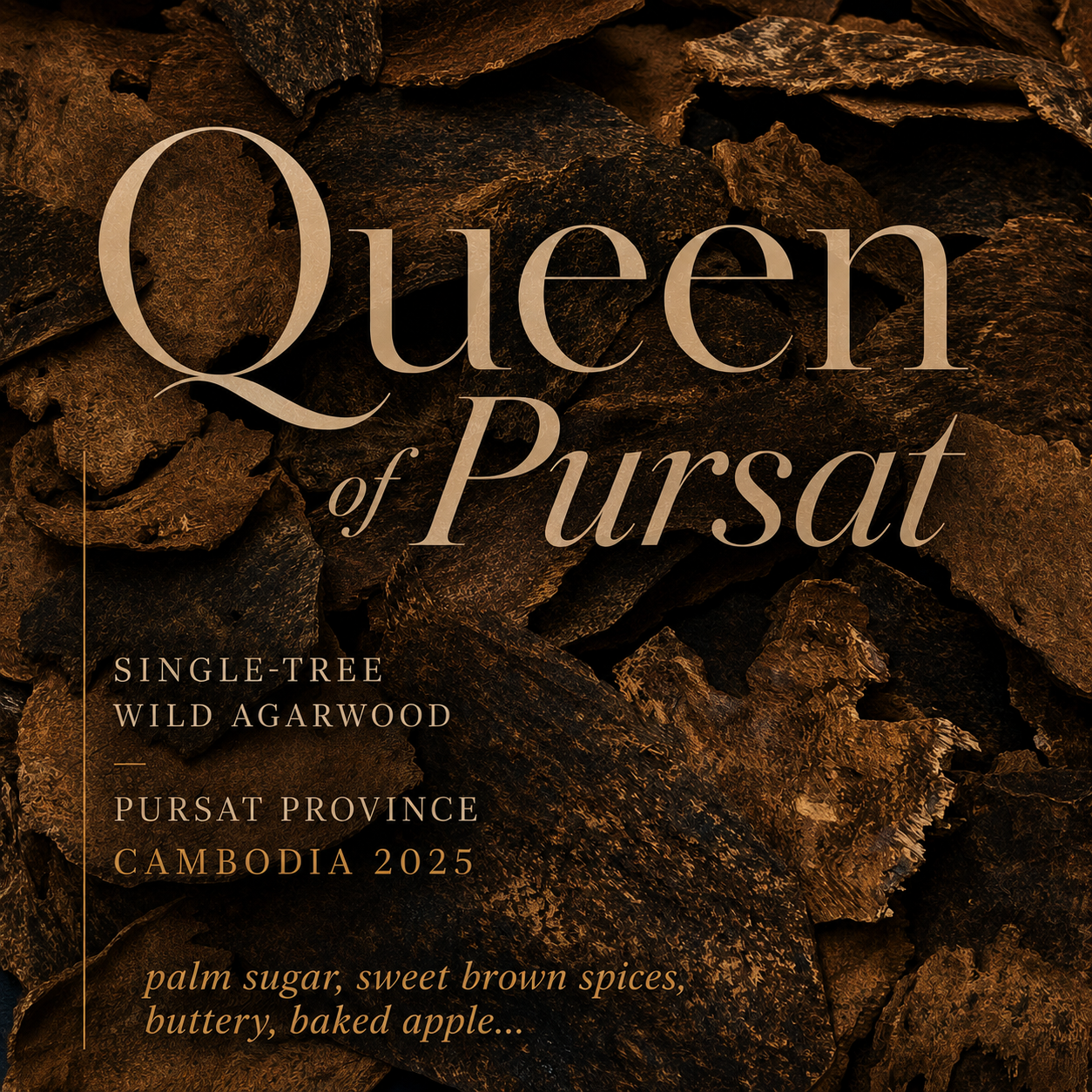
Cambodia, Pursat and Koh Kong: sweet, warm profiles with palm sugar, brown spice and baked apple, as in Queen of Pursat 2025, and the high-mountain selections from Pursat and Koh Kong.
Vietnam, Khanh Hoa and Nha Trang: classic Vietnamese agarwood, including Khanh Hoa Red Berry Sublime and Nha Trang Superior, dry-aged for more than 20 years.
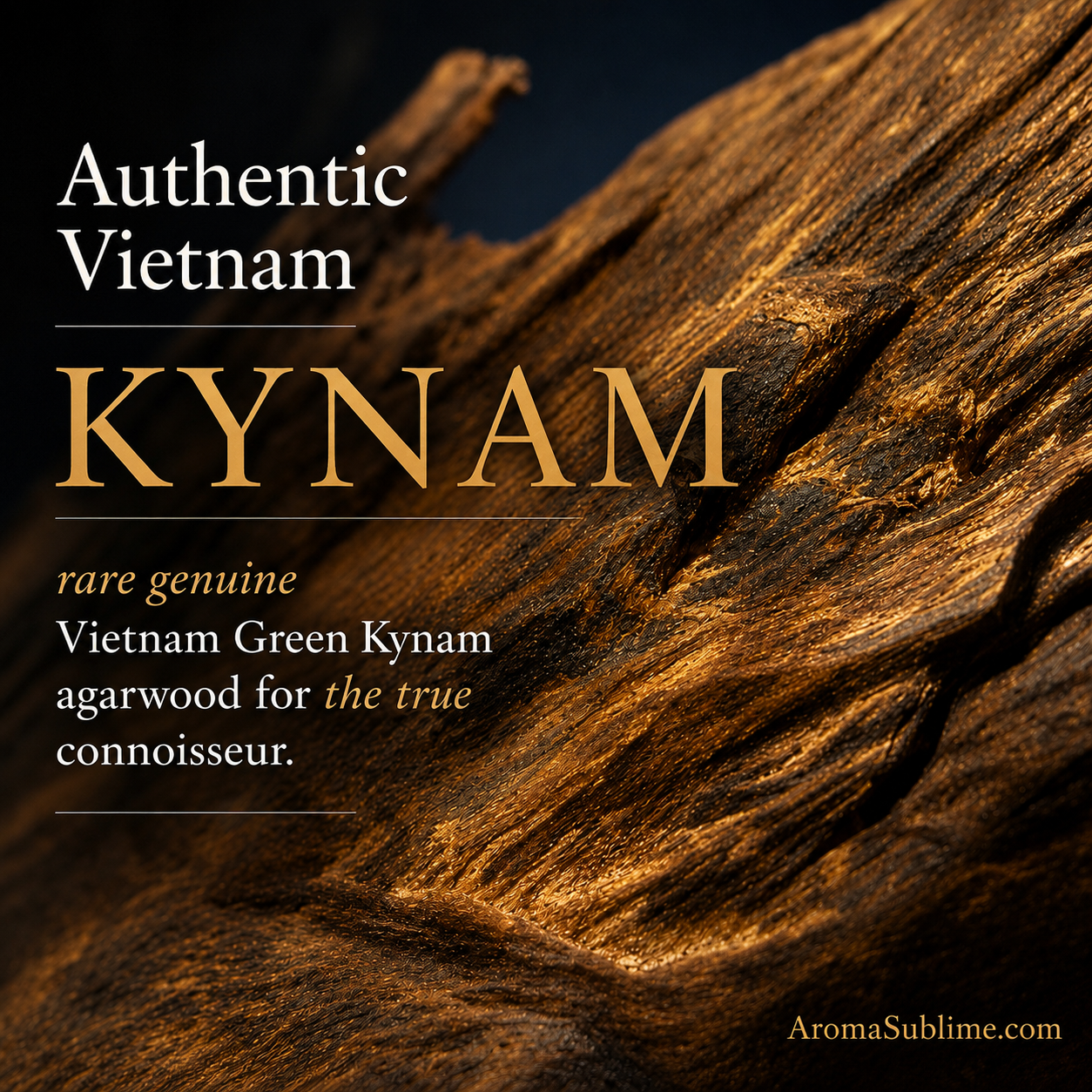
Green kynam (kyara) from near Hue: the rarest category of agarwood, with ethereal, dry and airy notes of a kind regular agarwood cannot match. Our Green Kinam is cut to order from a single large piece.
Thailand and Myanmar: Trat Private Reserve from Trat province, and Myanmar Intrepid.
How to heat agarwood
Agarwood is best heated rather than burned. Direct flame chars the wood and produces smoke that hides its character. A dedicated electric incense heater set to a low temperature releases the aroma slowly and cleanly. Start low, place a small sliver on the plate, and raise the heat gradually: the scent changes as the temperature rises, and a single piece can be enjoyed in stages.
Beware of fakes
The high value of agarwood has created a large trade in fakes and doctored wood, some of it skilfully made. We have documented many of these methods in our Fake Agarwood Gallery. Buying from a seller who knows the harvesters, and who can tell you the tree and year, is the best protection. If you are buying agarwood jewelry, read The Real Scent of Natural Agarwood Jewelry first.
Where to start
Prices start at $29. Each listing gives the tree, the origin, the harvest year and a scent description.